



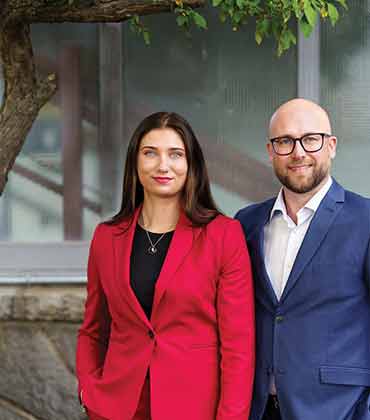
 Josefine Henriksson, Vice Managing Director and Deputy CEO and Dr. Fredrik Skog, Founder and CEO
Aktiv Medicin has built its practice around identifying those differences before deciding how to treat them.
The Stockholm clinic focuses exclusively on foot and hand conditions. Because its clinicians assess and treat these problems every day, they develop a deeper understanding of how similar diagnoses can behave differently. More than 1,000 operations each year add to that experience, helping the team refine not only how procedures are performed, but when surgery is likely to help and when it is best avoided.
“We don’t treat X-rays. We treat people,” says Dr. Fredrik Skog, founder and CEO.
Imaging shows the structural problem, but treatment also depends on physical examination, how the foot or hand functions, what causes pain or limitation and what the patient wants to regain. Only then does the team decide whether surgery is necessary and, if so, which intervention is most appropriate.
Seeing More Than the Visible Problem
Specialisation matters because a seemingly simple problem can have several causes.
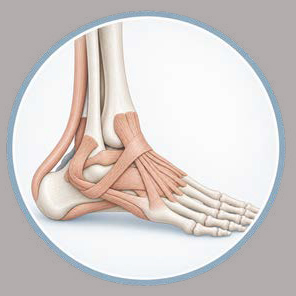
Skog often uses hallux valgus to explain the difference. A clinician may see the bunion, but the visible deformity does not reveal why pressure is developing there. The cause may involve the joint itself, another joint farther back, flat-foot alignment or the way the patient distributes weight while walking.
“You have to lift your eyes above the horizon of the problem and see the whole foot, and of course, the whole patient,” says Skog.
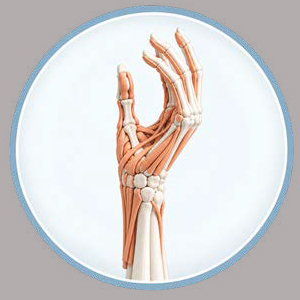
The same principle applies to hand and wrist conditions. A diagnosis such as carpal tunnel syndrome or trigger finger identifies the condition, but the team still needs to understand how much it affects the patient, which activities are difficult and whether intervention is likely to deliver meaningful improvement.
We don’t treat X-rays. We treat people.
Skog developed his interest in foot surgery during his residency at Södertälje Hospital, where one of Stockholm’s government hospital foot teams was then based. Working alongside Dr. Carlos Saro, a surgeon devoted entirely to foot surgery, showed him how much small details matter in a complex part of the body.
“Experience brings excellence,” he says.
Repeated exposure helps clinicians connect examination findings with treatment outcomes. Over time, they become better at recognising which findings matter, which procedures are appropriate and where problems may arise during recovery.
For patients, the benefit is care from a team that works with the same conditions every day and can distinguish between cases that may initially look alike.
Knowing When Surgery is Not the Answer
Many patients arrive at Aktiv Medicin after months or years of pain or functional limitations. Some have already tried physiotherapy, orthotics and medication or activity changes without significant improvement. Even then, surgery is not automatic.
 The team considers whether the expected benefit justifies the intervention for that particular patient. An older person with poor general health, for example, may not tolerate recovery after a major reconstruction. If a smaller procedure can reduce pressure or pain enough to improve walking, it may be the better option. Skog recalls treating a patient with several hammer toes whose overall health made a larger fusion procedure unsuitable. A limited tendon procedure relieved pressure without placing the same demand on the patient. Improvement was delivered within the patient’s physical limitations.
The idea is captured in one of Aktiv Medicin’s central principles; the right operation, for the right patient, at the right time.
A case involving actor, writer and comedian John Cleese demonstrates that thinking. While touring Europe, Cleese went to the clinic with a chronic foot wound. Rather than assuming surgery was required, the team examined why the wound was not healing. Pressure distribution, weight-bearing, biomechanics and footwear can all keep a wound open if the underlying cause is not addressed. Aktiv Medicin developed a plan around specialist wound care and close follow-up, allowing Cleese to continue his performance schedule. He later invited members of the clinic onstage during a performance in Norrköping, using the encounter to raise awareness of chronic wounds.
The clinical lesson was more important than the unusual setting. Effective treatment began with understanding the cause rather than assuming the most invasive solution was best.
Making Recovery Part of the Treatment
Aktiv Medicin performs its procedures as day surgery. With much of the recovery taking place outside the clinic, preparation and follow-up become especially important.
Responsibility extends beyond the surgeon.
“How the reception nurse calls, how the junior nurses inform the patient, how the OR nurse does her job and how the doctor does their job all shape the experience,” adds Skog. “It’s not a one-man show. It’s a group effort.”
-
Our ambition is that every patient leaves our clinic not only with an improved clinical outcome but also regains their quality of life and returns to the activities that matter most to them.
Many procedures are performed while patients are awake, making calm communication particularly important. Aktiv Medicin treats the patient journey as an organisational responsibility, not simply a sequence of clinical tasks.
To further help patients, the clinic is also developing a digital patient app that will place pre- and postoperative guidance in one accessible platform. Aktiv Medicin eventually hopes to adapt the system for other specialist clinics to support patient education and follow-up.
Using Outcomes to Improve the Next Decision
Clinical experience becomes more useful when results can be measured.
Aktiv Medicin participates in the Swedish National Foot and Ankle Register, Riksfot, which has collected 62,000 procedure and outcome data across participating clinics. Combining information matters because an individual foot or hand practice may not treat enough patients to identify reliable patterns across every procedure.
Skog points to hallux valgus surgery as one example. Patients sometimes arrive believing the procedure is exceptionally painful, produces poor results or that the deformity will simply return. Registry results give clinicians a more objective basis for discussing those concerns.
Sweden already uses national registries extensively in hip, knee and spine surgery. Skog sees the growing foot registry as a foundation for stronger research, particularly when outcomes from many clinics can be evaluated together. Better data can show which procedures work well, where complications occur and how treatment can be refined.
 Aktiv Medicin combines two forms of learning; judgment developed through daily practice and broader evidence created by measuring outcomes across thousands of cases. An upcoming meeting with Balkan Foot Association colleagues in Cyprus will allow Skog and his team to exchange experiences with specialists from cross-border countries.
Keeping Medical Decisions Close to Medical Reality
Aktiv Medicin’s patient-centred philosophy also shapes Skog’s view of healthcare leadership.
Clinicians see the consequences of operational decisions every day, including how scheduling, staffing, communication pathways and organisational changes affect colleagues and patients. Skog believes healthcare can lose valuable knowledge when strategic decision-makers become too separated from clinical reality.
“The further healthcare leadership moves away from clinical reality, the greater the risk that we optimise the organisation instead of optimising care for the patient,” he says.
His argument is not that every physician should become a full-time executive. Healthcare organisations, he believes, should create room for clinicians to remain involved in strategic decisions while continuing to practise medicine. Knowledge gained while treating patients should not remain, in his words, “on the floor.” The principle also explains Aktiv Medicin’s own model. Clinical judgment shapes not only the operation but the pathway around it, from deciding who should undergo surgery to organising follow-up and evaluating outcomes.
“Clinical excellence and good management are not competing priorities,” says Skog. “They should be together.”
 As orthopaedics becomes increasingly sub-specialised, Skog expects clinicians to focus more deeply on particular parts of the body and increasingly sophisticated treatment methods. Aktiv Medicin intends to keep building that depth in foot and hand care while preserving the question that guides every patient decision: “What will genuinely help this person?”
For combining specialist expertise with patient-specific surgical judgment, Aktiv Medicin is recognised by Healthcare Business Review Europe as Foot & Hand Surgery in Europe of the Year 2026.
“Our ambition is that every patient leaves our clinic not only with an improved clinical outcome but also regains their quality of life and returns to the activities that matter most to them,” concludes Skog.
Foot and Hand Surgery Practices in Europe Info
What Do Foot & Hand Surgery Companies in Europe Treat?
Foot & Hand Surgery Companies in Europe treat conditions affecting the feet, ankles, hands and wrists. Care may range from conservative treatment to limited procedures or complex operations. A diagnosis alone does not determine the right approach. Clinicians also consider pain, mobility, weight-bearing, daily activities and general health. The aim is to identify what is causing the limitation and choose an intervention proportionate to the problem, rather than treating an image or visible deformity in isolation.
How Does Aktiv Medicin Assess Whether Surgery Is Necessary?
Aktiv Medicin is a Stockholm clinic focused exclusively on foot and hand conditions. Its team performs more than 1,000 operations annually, building experience with conditions that may look similar but affect patients differently. For Foot & Hand Surgery Companies in Europe, assessment must look beyond X-rays to physical examination, foot or hand function and patient goals. Surgery is considered when its expected benefit justifies the intervention, not as an automatic response to a diagnosis.
What Should Patients Ask Before Choosing a Treatment Plan?
When comparing Foot & Hand Surgery Companies in Europe, patients should ask what causes their symptoms, which options are available and what each option may change. Hallux valgus, commonly called a bunion, illustrates why this matters: the visible deformity may relate to foot alignment or weight distribution. A clinician should explain whether conservative measures, a smaller procedure or a larger operation best fits the patient’s symptoms, health and goals. The discussion should cover likely limitations and recovery demands.
How Does Recovery Planning Affect Foot and Hand Surgery?
Foot & Hand Surgery Companies in Europe need to plan for recovery, especially when procedures take place as day surgery and patients recover at home. Clear preparation helps patients understand what to expect. Afterwards, guidance on pain management, wound care, mobilisation and rehabilitation gives them a recovery plan. Patients should know how to contact the clinic if symptoms change or a wound causes concern. Follow-up is part of treatment, not an administrative step.
How Does Aktiv Medicin Use Outcomes Data to Inform Treatment?
Aktiv Medicin participates in Sweden’s national foot and ankle register, Riksfot, which has collected data on 62,000 procedures and outcomes across participating clinics. This evidence helps clinicians compare results and discuss concerns such as pain, recurrence and complications. Foot & Hand Surgery Companies in Europe can use registry findings alongside individual examinations to explain expected outcomes more objectively. Registry data does not replace clinical judgment, but it can reveal patterns that one practice may not identify from its own cases.
What Should Patients Expect From Follow-Up?
Foot & Hand Surgery Companies in Europe should explain what support is available after treatment and which changes warrant clinical advice. Patients can ask how wound care, movement and rehabilitation will be managed, what milestones to expect and whom to contact between appointments. Instructions are most useful when they match the procedure and the patient’s health rather than treating every recovery as identical. Digital guidance can make pre- and postoperative information easier to access, but it should complement clinical assessment when a concern arises.
